Words were not always a comfortable place for Kiki. At school, she never considered herself one of the literature girls, feeling far more at ease with numbers. Dyslexia made writing feel intimidating in her younger years, creating a complicated relationship with the very thing that would eventually become her creative sanctuary. It was only in her early twenties, when she began writing letters to her future self, keeping journals and filling pages with reflections and essays, that something shifted. Writing stopped feeling like an obstacle and became a way of understanding the world around her.
That private relationship with words gradually became a defining part of her identity. Today, Kiki describes herself as a self proclaimed “thought daughter”, a phrase that captures her lifelong tendency to think deeply about almost everything. Friends once joked that she could turn any conversation into something profound. With time, what once felt like an overwhelming need to analyse life began to feel more like a gift. She has learned to find meaning in ordinary moments and inspiration in places others might overlook. Her curiosity is so constant that even something as simple as lip gloss can become the subject of a poem.

That ability to turn everyday experiences into stories has helped Kiki build a community of more than 30,000 people who read her work. Yet the size of her audience has not changed the way she approaches writing. When she creates, she thinks about the woman she was two years earlier and imagines writing for the version of herself who needed to hear those words. That has been her philosophy since the days when her writing lived quietly in the notes app on her phone, long before she began sharing it through Substack. The fact that those personal reflections now resonate with thousands of people is something she remains grateful for.
For Kiki, inspiration is almost impossible to switch off. It can emerge from a conversation, a passing thought, something she reads or an experience that refuses to leave her mind. She often finds herself interrupting a conversation with the realisation that she needs to write something down because it could become a story. Her creative process is rooted in paying attention. Life itself becomes the material, provided you are willing to notice it.
In a digital landscape where attention is constantly being competed for, she believes the most powerful writing is often the writing that makes someone feel less alone. Many people move through life believing their emotions are uniquely theirs, particularly during periods of uncertainty or change. Kiki experienced this herself when she moved abroad and struggled with homesickness, convinced that nobody could fully understand what she was feeling. That experience shaped her belief that specific, honest writing can create a powerful sense of recognition. When someone reads something and thinks, “I thought I was the only one who felt this way,” the noise around them suddenly becomes quieter.
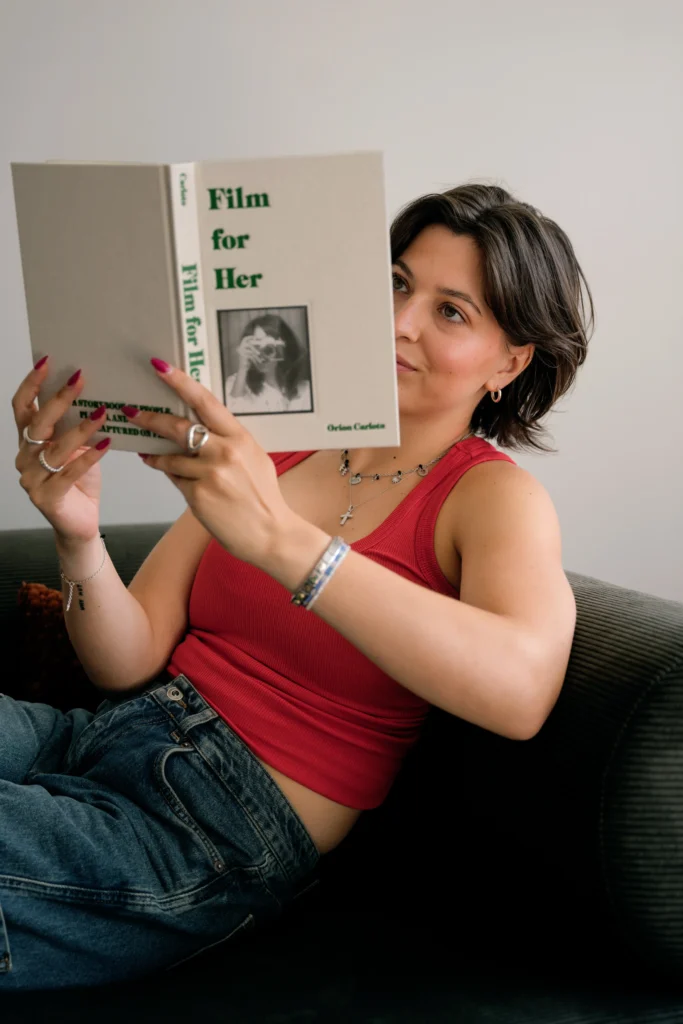
Her work is personal, but sharing personal experiences also requires boundaries. Kiki admits that she is still learning where that line exists. Not every experience belongs to an audience, and not every emotion needs to become content. She tries to remain honest about what feels like hers to share while protecting the parts of her life that still need privacy. It is a balance many modern creators understand, particularly in a world where authenticity is often confused with complete access.
The same philosophy shapes the way she approaches digital content. There is no shortage of advice online about increasing engagement, creating viral posts and understanding algorithms, but Kiki has increasingly chosen to release herself from the pressure of making every piece perform. She wants to create what feels genuine and allow each piece to find its own audience. Engagement can be unpredictable, and she believes authenticity is more valuable than trying to engineer a particular reaction.
Perhaps the most meaningful response she receives is not a compliment about her writing, but a message from someone saying she inspired them to begin writing themselves. Knowing that something she created encouraged another person to make a decision, take a risk or finally express something they had been carrying feels almost surreal. It is a reminder that words do not have to change the world on a grand scale to make a meaningful difference. Sometimes they simply need to reach one person at the right moment.

Reading is another essential part of her creative identity. Books have become a way for Kiki to understand both herself and the world around her, with every story leaving some kind of mark on her perspective and eventually finding its way into her own writing. Among the works that have influenced her, Yesteryear holds a particular place. Its honest portrayal of flawed characters encouraged her to approach her own work with greater humanity, embracing imperfections rather than trying to create something overly polished.
There is an understated beauty in Kiki’s approach to storytelling. She does not position herself as someone who has arrived with all the answers. Instead, her writing reflects someone who is still learning, questioning, changing and becoming. Perhaps that is why her work feels so relatable. She writes from within the experience rather than from a place of having completely figured it out.
Her message to readers ultimately reflects that belief. “You will never arrive,” she says, recognising that life is not a destination where we eventually become one final version of ourselves. It is a continuum of growing, changing and becoming. We will evolve, rethink ourselves, discover new sides of who we are and sometimes outgrow identities we once believed were permanent.

For Kiki, that uncertainty is not something to fear. It is the beauty of being human. Her journey from feeling intimidated by words to building a community around them demonstrates how the things we once struggled with can sometimes become the very things that give us our voice. Through writing, she has created more than content. She has created a space where ordinary thoughts can become meaningful, private emotions can become shared experiences and readers can recognise themselves in someone else’s words.
In a world that constantly encourages us to define ourselves, Kiki offers a gentler idea: perhaps we were never meant to arrive at one final definition. Perhaps the most interesting version of ourselves is always the one still becoming.