
The meaning of aesthetic medicine is evolving. Increasingly, the focus is moving away from dramatic transformations towards subtle refinement, long term skin health, and results that preserve the individuality of each person. For Dr Cristina Cristina, this philosophy lies at the heart of responsible aesthetic practice. Her approach brings together medical knowledge, artistic sensitivity, and a deep respect for the person behind every treatment.
At the centre of her philosophy is a simple but powerful belief: aesthetic medicine should enhance natural beauty without compromising identity. A successful treatment, she explains, is not about changing the way someone looks, but about refining their features, restoring balance, and bringing out what is already uniquely theirs. Guided by the principle that less is often more, she values subtlety, harmony, and elegance, creating results that feel effortless and remain true to the individual. Every face tells a story, and respecting that story requires not only an understanding of facial anatomy, but also the clinical judgement to recognise what is appropriate and what is best left untouched. For Dr Cristina, the most beautiful outcome is one in which patients recognise themselves in the mirror, looking refreshed, confident, and naturally beautiful.
This commitment to individuality begins long before a treatment takes place. Personalised care, in her view, starts with listening. Understanding a patient’s concerns, expectations, motivations, and personal definition of confidence is just as important as assessing facial proportions and skin quality. Only by understanding the person can a practitioner create a treatment plan that reflects their genuine needs rather than the influence of passing trends or standardised beauty ideals. Dr Cristina believes that no two faces are the same, and consequently, no two treatment plans should be identical. Her role is to bring together a patient’s wishes with medical knowledge and professional judgement, identifying what may be beneficial and recognising when doing nothing is the most appropriate decision. True personalisation, she believes, is about finding the right balance between what someone desires and what will genuinely serve their well being.
That balance has become increasingly important in a world shaped by social media. While online platforms can introduce people to new possibilities and offer inspiration, they can also encourage unrealistic expectations and create the impression that appearance must constantly be corrected or improved. Dr Cristina approaches these conversations with empathy rather than judgement. When a patient requests a treatment inspired by an image or a beauty trend, she seeks to understand what lies behind the request and what the individual hopes to achieve. She then helps them recognise that a result that looks harmonious on one person may not be suitable for another. Each face has its own proportions, character, and identity, and these differences deserve to be respected.
For Dr Cristina, aesthetic medicine should empower people rather than make them feel inadequate. Trends will inevitably change, but individuality should never go out of fashion. She believes that patients should make decisions based on their own wishes and needs, rather than pressure to resemble someone else. Preserving identity is just as important as enhancing beauty, and sometimes the greatest achievement is not a visible transformation, but a renewed sense of confidence in the features that have always made someone unique.
Her emphasis on individuality also informs her approach to skin health. Rather than viewing aesthetic care as a series of isolated treatments, Dr Cristina sees it as a long term investment in the quality, resilience, and vitality of the skin. Healthy skin provides the foundation for natural looking results, and its needs must be understood before any treatment is recommended. Because every person’s skin has different characteristics and concerns, she favours carefully considered plans that evolve with the individual rather than quick fixes or one size fits all solutions.
Consistency, prevention, appropriate skincare, and thoughtfully selected treatments all have a role to play in maintaining skin quality over time. She also stresses the importance of patience, recognising that not every concern requires immediate intervention. In some cases, strengthening the skin’s foundations may be more beneficial than proceeding directly to additional procedures. Her philosophy looks beyond immediate improvements, focusing instead on care that supports lasting skin health. Beautiful skin, she believes, is not defined by perfection, but by health, balance, and a natural radiance that reflects the person.
Such a considered approach also shapes the way Dr Cristina manages expectations. In aesthetic medicine, trust is built through honesty, empathy, and a willingness to place patient well being above the desire to perform a procedure. During consultations, she takes time to understand what a patient hopes to achieve while offering a clear professional assessment of what is medically appropriate and realistically possible. When expectations do not align with her clinical judgement, she explains her reasoning, discusses the limitations of a proposed treatment, and considers alternatives where appropriate.
There are occasions when the most responsible answer is no. Dr Cristina does not view this as a failure to help, but as an essential part of ethical medical practice. A treatment should never be performed simply because it has been requested, particularly when it may not serve the patient’s best interests. Professional integrity means recognising the limits of what can be achieved and having the confidence to advise against an unsuitable procedure. Although an honest answer may not always be the one a patient initially hopes to hear, she believes that trust grows when recommendations are guided by care, responsibility, and respect. For her, the measure of a physician is not only the ability to deliver a beautiful result, but also the judgement to know when not to proceed.
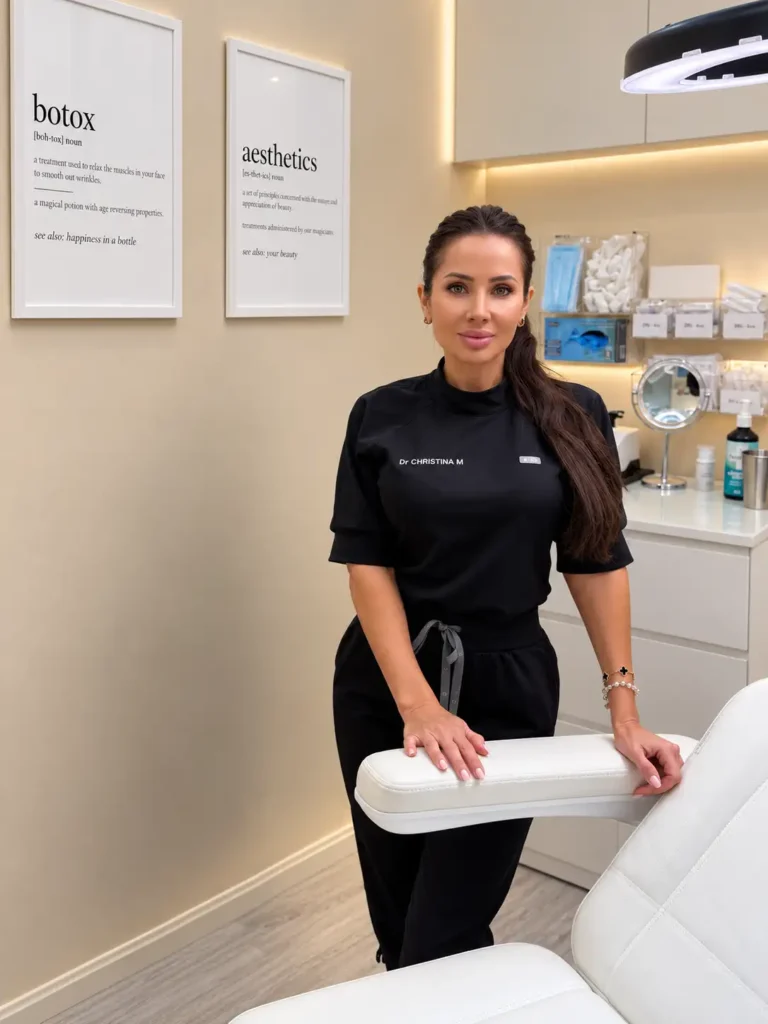
This sense of responsibility extends to the technologies and techniques continually emerging within the aesthetics industry. Dr Cristina welcomes innovation and recognises its potential to refine treatments and improve patient care, but she is careful not to equate novelty with progress. Before introducing a new technology or approach into clinical practice, she considers the scientific evidence, safety profile, available clinical data, and training required for its responsible use. She also looks closely at its limitations, potential risks, and suitability for different patients.
These considerations matter far more than the excitement surrounding a new launch. For Dr Cristina, innovation and responsibility are complementary principles. Progress should be welcomed, but it must always be guided by scientific understanding, appropriate training, and sound clinical judgement. The newest technology is not necessarily the best choice for every patient, and its value ultimately depends on how thoughtfully it is used.
Beyond the physical results of treatment, Dr Cristina is equally attentive to the emotional relationship people have with their appearance. Confidence is deeply personal, influencing how individuals see themselves, interact with others, and experience their place in the world. This is why she believes aesthetic consultations must look beyond the feature a patient wishes to improve and consider the person behind the request. Understanding motivation and emotional expectations is an important part of responsible care, allowing patients to feel heard and respected while ensuring that decisions are made thoughtfully.
Aesthetic treatments can improve certain features and skin concerns, and may help people feel more comfortable with aspects of their appearance. However, Dr Cristina emphasises that they cannot resolve every emotional difficulty or guarantee happiness and lasting self confidence. Maintaining realistic expectations is essential. There may be times when a patient needs more time to reflect, discuss their concerns further, or postpone a procedure altogether. Recognising when an aesthetic treatment may not be the right answer is as important as identifying when one could be beneficial.
Her aim is to support confidence without encouraging dependence on external validation. Beauty should not become a constant pursuit of correction, nor should a person’s sense of worth depend on achieving a particular appearance. By approaching each consultation with compassion, honesty, and respect, Dr Cristina hopes to help patients make informed decisions that feel right for them while remaining connected to their own identity.
In a field where non surgical cosmetic procedures are increasingly accessible, she believes that patient education is essential. Treatments that appear simple may still carry risks and require medical knowledge, appropriate training, careful assessment, and responsible aftercare. Patients should feel comfortable asking about a practitioner’s qualifications and experience, the procedure being considered, expected outcomes, possible complications, and the care required afterwards. They deserve clear answers and enough time to make an informed decision without feeling rushed or pressured.

For Dr Cristina, patient care extends far beyond the moment a treatment is performed. Thorough consultations, honest discussions about suitability, realistic expectations, clear aftercare instructions, and access to professional guidance when concerns arise are all integral to responsible practice. Patients should understand what to expect during recovery, which signs may require further assessment, and how to seek help if an unexpected reaction or complication occurs. Beautiful results should never come at the expense of safety, and ethical practice means being transparent about both the possibilities and the limitations of treatment.
As both a clinician and an educator, Dr Cristina also recognises the wider responsibility to raise standards throughout aesthetic medicine. Technical ability is important, but it is only one part of clinical excellence. A strong foundation in medical knowledge, a thorough understanding of anatomy, sound judgement, and an unwavering commitment to patient safety are equally essential. In a rapidly evolving profession, continuous education allows practitioners to remain informed while developing the critical thinking needed to evaluate new evidence and determine whether a treatment is genuinely appropriate.
She believes professional education must place ethics at its centre. Practitioners need to understand not only how to perform a procedure, but also when it is unsuitable, when expectations need to be reconsidered, and when declining treatment is the most responsible course of action. The ability to say no is a sign of professional maturity, not a limitation. By encouraging a culture of knowledge, humility, and accountability, clinicians and educators can help cultivate practitioners who make informed decisions, communicate honestly, and recognise the individual needs of every patient.
For Dr Cristina, the purpose of education extends beyond transferring technical knowledge. It is about developing professionals who understand the responsibility that accompanies their expertise and remain committed to learning throughout their careers. Technical excellence gains its true meaning when it is supported by integrity, careful judgement, and respect for the person receiving care.

Looking towards the future, she anticipates an increasingly personalised and preventative approach to aesthetic medicine. Advances in scientific understanding and technology will continue to expand the possibilities available to practitioners, but she believes the greatest progress will come from using those possibilities with care and discernment. Prevention and long term skin health are likely to become even more central, shifting attention from correcting visible concerns alone towards maintaining skin quality, supporting natural vitality, and adapting treatment plans as each patient evolves over time.
Personalisation will remain equally important. The future of aesthetic care, in her view, should move further away from standardised ideals and towards treatments that respect individual features, skin characteristics, expectations, and goals. Technology can open new doors, but the practitioner’s experience and clinical judgement remain essential in deciding which approaches are appropriate and when they should be used.
She also believes that the artistry of aesthetic medicine will continue to play a vital role. Science provides the foundation, technology expands what may be possible, and artistic judgement brings an understanding of proportion, balance, and harmony. When these elements are combined with empathy and ethical responsibility, they can support results that are effective while remaining natural and individual. Progress should not be measured by the number of treatments available or by how dramatically a person’s appearance can be changed. It should be measured by the quality of care, the trust built between practitioner and patient, the safety maintained, and the confidence patients gain without losing their sense of self.
Ultimately, Dr Cristina Cristina’s philosophy is rooted in the belief that aesthetic medicine should serve individuality, not erase it. Her approach brings together scientific precision and artistic sensitivity, with an emphasis on prevention, thoughtful decision making, and respect for each patient’s unique identity. In a culture that often celebrates transformation, she offers a quieter and more enduring vision of beauty: one defined by balance rather than excess, confidence rather than comparison, and care rather than pressure.
For Dr Cristina, the most beautiful result is not the one that turns a person into someone else. It is the one that allows them to recognise themselves, feeling refreshed, confident, and authentically who they are.