Beauty has always moved in cycles, but every so often a revival feels less like repetition and more like reinvention. This season marks the arrival of what many insiders are calling the Icy Blue Renaissance, a vivid resurgence of frosted lids and crystalline finishes that nod to the late 1990s and the hyper glossed glamour of 2016, yet feel decisively modern. Nostalgia has rarely looked so polished. The powdery pastels of decades past have been replaced with high pigment metallic blues, liquid silvers and light catching textures that gleam under both runway lights and smartphone cameras. It is a maximalist exhale after years of restrained minimalism.
For much of the early 2020s, the dominant aesthetic was pared back and intentionally effortless. Skin was dewy but subdued, eyes were softly defined, and colour was used sparingly if at all. The so called Clean Girl look prioritised grooming over glamour, with brushed brows, neutral tones and barely there lips. While it celebrated natural features, it also fostered a certain uniformity. Faces began to blur into one another across social platforms, each glowing in the same muted palette. The re emergence of icy blue feels like a playful rebellion against that sameness. It signals a renewed appetite for artifice, performance and joy.
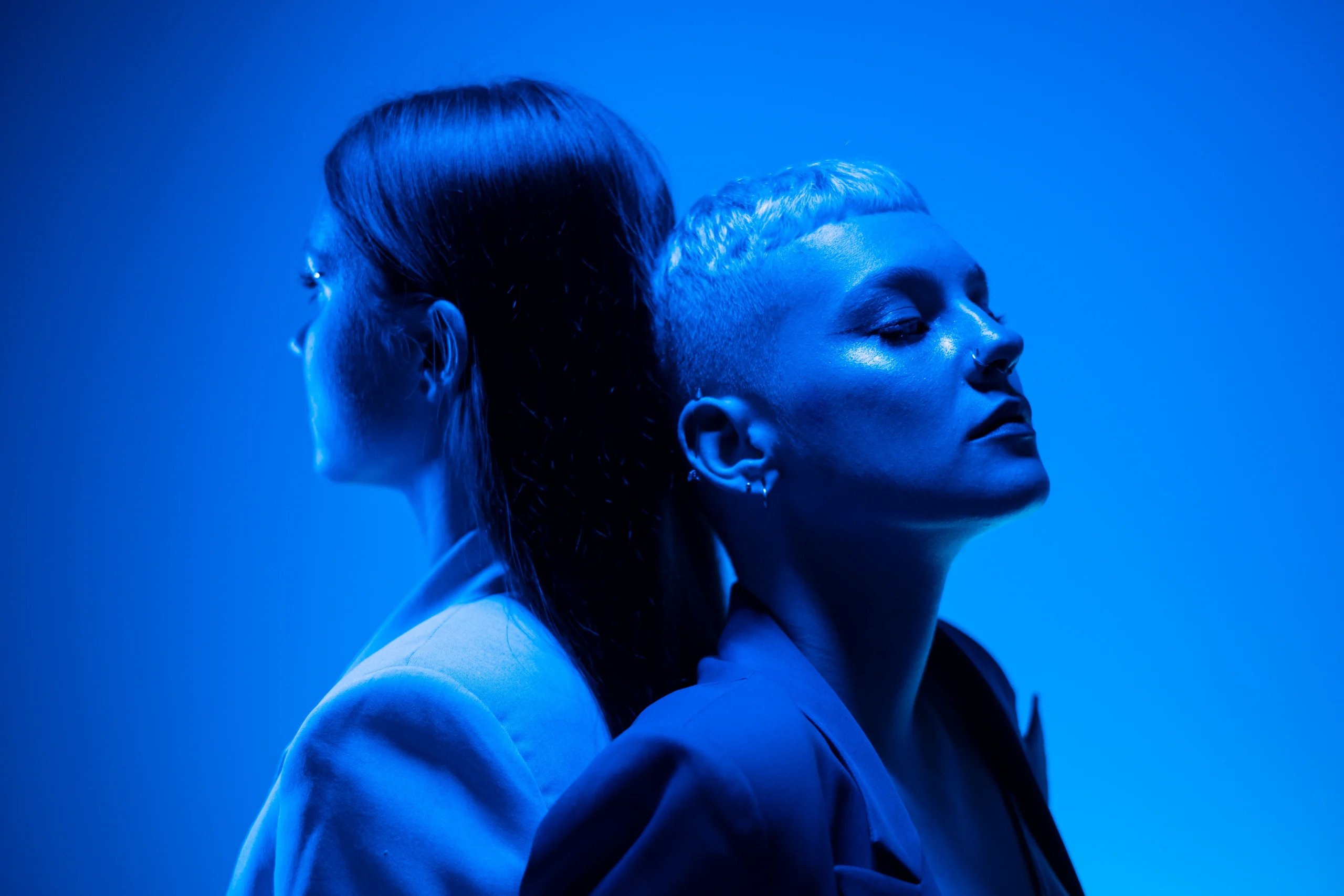
The modern interpretation of icy blue eyeshadow is far removed from the chalky formulations that once dominated bathroom cabinets. Advances in cosmetic chemistry have transformed what metallic pigment can achieve. Contemporary shadows are saturated, finely milled and often infused with reflective particles that create a molten effect across the lid. Rather than sitting flatly on the skin, they shift with movement, catching the light in a way that feels almost liquid. Cream to powder hybrids and foil finish formulas allow for seamless blending while maintaining intensity. The result is a statement eye that looks editorial rather than nostalgic caricature.
Runways have been instrumental in reframing the shade. Designers have paired sheets of frosted blue with sharply tailored silhouettes, sleek hair and sculpted complexions, creating a tension between cool futurism and retro charm. The colour has been swept boldly across the entire lid, extended towards the brow bone or diffused into a smoky haze that reads both icy and sultry. In some shows, it has been combined with equally reflective inner corner highlights, amplifying the sense of crystalline drama. The message is clear. This is not a timid wash of pastel but a confident stroke of pigment designed to be seen.

Equally central to the renaissance is the return of doll like clustered lashes. Rather than the feathery, brushed out effect favoured in recent years, lashes are being grouped into defined sections that frame the eye with deliberate exaggeration. The influence of 1960s mod beauty lingers here, but the execution feels sharper and more graphic. Individual clusters are placed strategically to create a wide eyed, almost animated effect. When set against metallic blue lids, the contrast is striking. The coolness of the shadow intensifies the depth of the lashes, giving the gaze a hypnotic clarity.
Social media has accelerated the spread of this aesthetic, yet it has also democratised its interpretation. Beauty enthusiasts experiment with placement, pairing icy tones with glossy lips, sculpted cheeks or even bare skin to balance the drama. Some lean fully into the frost, layering shimmer upon shimmer for a high shine finish that borders on theatrical. Others soften the look by blending the blue into charcoal or soft grey, creating dimension without overwhelming the face. The versatility of the shade is part of its appeal. It can read ethereal, futuristic, rebellious or romantic depending on context.
Culturally, the timing feels significant. After prolonged periods of uncertainty and restraint, there is a collective craving for expression. Makeup becomes a form of escapism, a small but potent assertion of individuality. The resurgence of icy blue speaks to a willingness to be noticed again. It embraces a certain artificiality without apology, acknowledging that beauty can be playful and self aware. Where minimalism sought authenticity through subtlety, this new wave finds authenticity in bold self presentation.
There is also a generational dialogue at play. For those who came of age in the late 1990s or mid 2010s, the shade carries emotional resonance. It evokes teenage experimentation, glossy magazines and the early days of digital beauty culture.

For younger consumers, it feels fresh and ironic, a colour unburdened by personal memory. This dual appeal allows the trend to bridge age groups, uniting them in a shared moment of rediscovery.
Importantly, the modern icy blue eye is rarely worn in isolation. Skin remains polished and intentional, often with a satin or softly luminous base that prevents the look from tipping into costume. Complexion products have evolved alongside eye formulas, offering lightweight coverage that perfects without masking. Contour and highlight are applied with precision, sculpting the face so that the cool tone of the shadow appears integrated rather than jarring. Lips are frequently kept neutral or finished with a clear gloss, allowing the eyes to command attention.
The renaissance also reflects broader shifts within the beauty industry. Consumers are increasingly interested in texture and finish as much as colour. Frosted no longer implies flat shimmer but rather a spectrum of reflective possibilities, from finely dispersed pearl to mirror like chrome. Brands have responded by investing in innovative pigments and sustainable packaging, recognising that visual impact must be paired with ethical credibility. The new metallics are often formulated without heavy metals, designed to deliver intensity without compromising comfort or safety.
As with any bold trend, there are risks. Poorly blended blue can overwhelm the eye or clash with undertones if chosen carelessly. The key lies in undertone awareness and application technique. Cooler complexions may gravitate towards silvery blues, while warmer skin tones can experiment with teal infused metallics that harmonise with natural warmth. Strategic placement, such as concentrating pigment at the centre of the lid or along the lower lash line, allows for drama without excess. The sophistication of the renaissance lies in these details.

Ultimately, the return of icy blue signals a broader liberation from the constraints of quiet beauty. It invites experimentation and celebrates makeup as adornment rather than mere enhancement. In its reflective sheen and unapologetic pigment, there is a sense of optimism. The frost is not cold in spirit but invigorating, like crisp winter air that sharpens the senses. After seasons of restraint, the face becomes a canvas once more.
The Icy Blue Renaissance is not simply about a colour. It is about reclaiming glamour in a contemporary key, blending memory with innovation. It proves that nostalgia, when filtered through modern technique and cultural awareness, can feel entirely new. In the shimmer of metallic lids and the flutter of clustered lashes, beauty finds its sparkle again, cooler and more confident than ever.