From child performer to acclaimed actress and producer, Joey King has grown beneath the gaze of Hollywood while quietly forging an identity of her own, one shaped by courage, reinvention and an instinct for stories that endure.
There is something rather old fashioned about the idea of an actress growing into her craft before the public’s eyes. Hollywood has always been fascinated by youth, yet it has not always been equally generous about allowing its young performers to become complicated adults. To remain beloved is one thing; to remain curious, ambitious and creatively restless is another. Joey King has managed the latter.
Her career began when she was a child, long before the machinery of celebrity had become an everyday language. Commercials led to television, television to film, and childhood appearances gradually gave way to roles that demanded something more substantial than charm. She was not merely growing older in front of the camera. She was learning what it meant to inhabit another life.
That distinction has become increasingly important in understanding King’s career. She is not simply an actress who happened to begin young. She is an artist whose education has been unusually public.
Born and raised in Los Angeles, King entered professional acting at four years old and spent her childhood moving through commercials, television and film. Her early work included appearances in The Suite Life of Zack & Cody and Malcolm in the Middle, followed by increasingly prominent film roles. She eventually appeared in Ramona and Beezus, Crazy, Stupid, Love, The Dark Knight Rises, The Conjuring, White House Down and Oz the Great and Powerful. Such a catalogue might, at first glance, suggest the conventional rise of a young Hollywood performer. Yet the more interesting story lies in what came afterwards.
King understood that early visibility could become a trap. Audiences are often reluctant to relinquish the image of a child they have watched grow up. The entertainment industry can be equally reluctant, repeatedly offering performers versions of roles that have already proved successful. King’s response has been to keep moving.
Her breakthrough in The Kissing Booth brought her a vast international audience and made her one of the recognisable young faces of the streaming generation. The film’s popularity turned her into a phenomenon among younger audiences, while the subsequent films expanded that relationship with viewers around the world. What might have remained a conventional teenage romance franchise became, for King, another stage in a much larger professional education. She also took on executive producing responsibilities, beginning to occupy a position beyond that of performer alone.
That move from actress to producer is perhaps more significant than it initially appears. To perform is to interpret a story. To produce is to participate in deciding which stories are told, how they are developed and who is given the opportunity to tell them. For an actress who began working professionally as a child, this represents a particularly important evolution. It suggests a growing desire for authorship, and authorship is ultimately what separates longevity from mere fame.
The most revealing evidence of King’s ambition came with The Act, the 2019 drama in which she portrayed Gypsy Rose Blanchard. It was a role of considerable psychological and physical intensity, requiring her to move dramatically away from the youthful image associated with some of her earlier work. King underwent a striking physical transformation for the part and approached the character with an attention to voice, mannerism and emotional complexity that demonstrated an appetite for difficult material. The performance earned her Primetime Emmy, Golden Globe and Screen Actors Guild Award nominations, confirming what the role itself had already made clear: she was capable of far more than the industry had previously asked of her.
There is a certain courage in deliberately dismantling an image that has made you successful. It is tempting, particularly in celebrity culture, to regard transformation as a matter of appearance, involving different clothes, different hair, different photographs and different roles. Genuine transformation is more demanding. It requires an artist to risk disappointing an audience that already knows what it likes. King has repeatedly taken that risk.
Her subsequent work has carried her into action, comedy, romance and fantasy. In Bullet Train, she entered a frenetic ensemble world alongside Brad Pitt. In The Princess, she placed herself at the centre of an action driven narrative, demonstrating a physicality that further expanded her range. She has also continued to work across the streaming landscape, where the traditional boundaries between cinema and television have become increasingly indistinct. This ability to move between genres is culturally significant because contemporary audiences no longer experience actors in the same way previous generations did. The cinema screen, television, streaming service, social media platform and fashion campaign now coexist as parts of one enormous cultural landscape. A performer can be discovered in one medium and become influential in another almost overnight.
King has grown alongside this transformation. Yet for all the immediacy of modern celebrity, her career possesses something surprisingly traditional: an emphasis on craft. Acting remains at the centre of it. There is a difference between being famous and being remembered for a performance. Fame depends upon visibility, while performance depends upon memory. One belongs to the moment; the other has the possibility of outliving it. King’s most ambitious roles suggest that she understands this distinction.
That may also explain the importance of Practical Magic 2, in which she joins Sandra Bullock and Nicole Kidman in the long awaited continuation of the beloved supernatural story. Nearly three decades after the original film, the new chapter turns towards a younger generation, with King portraying Kylie, one of Sally Owens’s daughters, alongside Maisie Williams as Antonia. The cultural importance of Practical Magic is larger than its original box office story might suggest. What was once regarded principally as a whimsical supernatural romance has developed into a lasting cultural touchstone, particularly among women who have embraced its themes of sisterhood, female resilience, family and belonging. Its return therefore carries a certain generational weight.
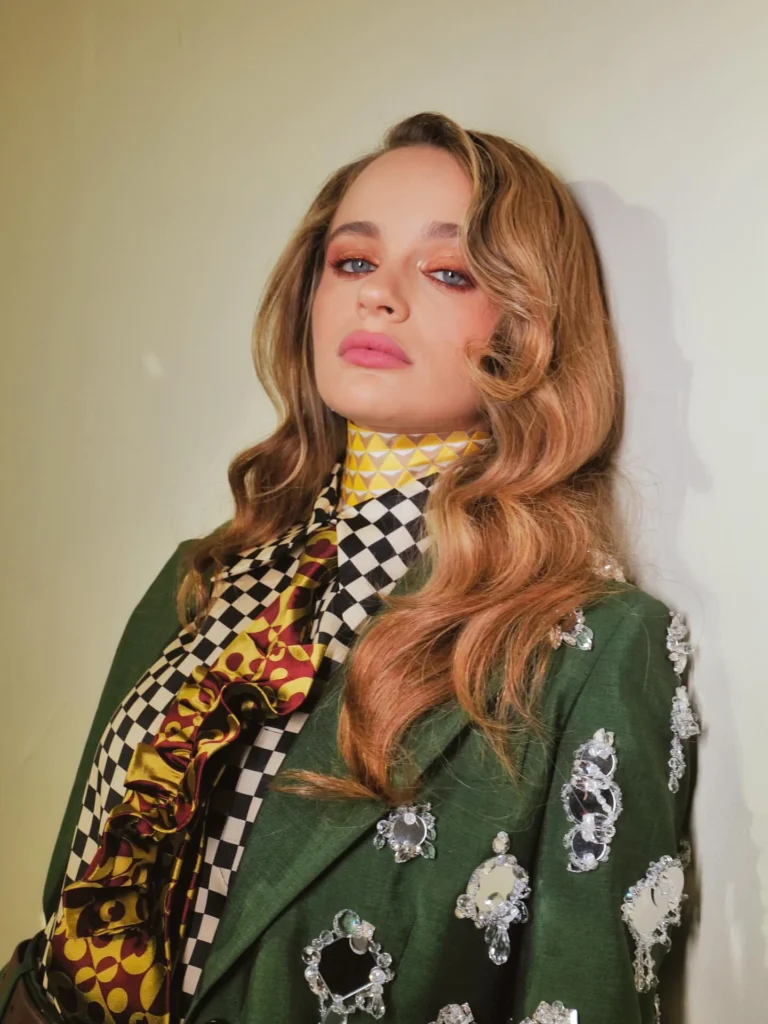
King is not simply joining a successful franchise. She is entering an inherited cultural mythology. That is an intriguing position for an actress of her generation. She belongs to a new generation, yet she is stepping into a story that has been cherished by an older one. She is therefore part of a cinematic handover, a passing of the torch between women who helped define one era of popular culture and younger performers now being asked to carry its spirit forward.
Recent discussion around Practical Magic 2 has emphasised this idea of generational legacy and the continuation of female centred storytelling. The film’s creators and returning stars have spoken about sisterhood, family patterns and the changing understanding of women’s strength across generations. King’s involvement consequently has a resonance beyond casting. She represents continuity, and continuity is one of the most powerful forces in culture.
Fashion understands it instinctively. Music understands it. Literature understands it. A style, melody, phrase or story may disappear for a time only to return when a new generation discovers its meaning. Culture rarely moves in a straight line. It remembers. Practical Magic 2 arrives in precisely that spirit, carrying the atmosphere of the original into a new cultural moment. King’s presence allows the story to retain its history while introducing a different generation of viewers to its world.
There is something fitting about King occupying this position. Her own career is built upon the same principle of continuity. The child actress has not vanished. She has evolved. The performer who once played youthful characters now carries more complicated emotional landscapes. The actress who became known through streaming has moved into producing. The young woman who grew up beneath Hollywood’s gaze has gradually begun to exercise greater authority over the stories she helps create. Nothing has been discarded; everything has been accumulated.
Perhaps this is what makes her story more interesting than the conventional Hollywood narrative of overnight success. There was no single moment in which Joey King became Joey King. There were years of work, uncertainty, experimentation and gradual discovery. That is the less glamorous truth about a lasting career. It is built through persistence, role by role and choice by choice.
There is also a broader cultural lesson in the experience of performers who begin young. Childhood is ordinarily a private period of experimentation, when a person can try on different identities without having to defend each one publicly. A child actor does much of that experimentation beneath lights and lenses. King’s journey therefore offers an unusual portrait of growing up in modern entertainment. She has had to negotiate the tension between familiarity and change, between the person audiences remember and the woman she is becoming.
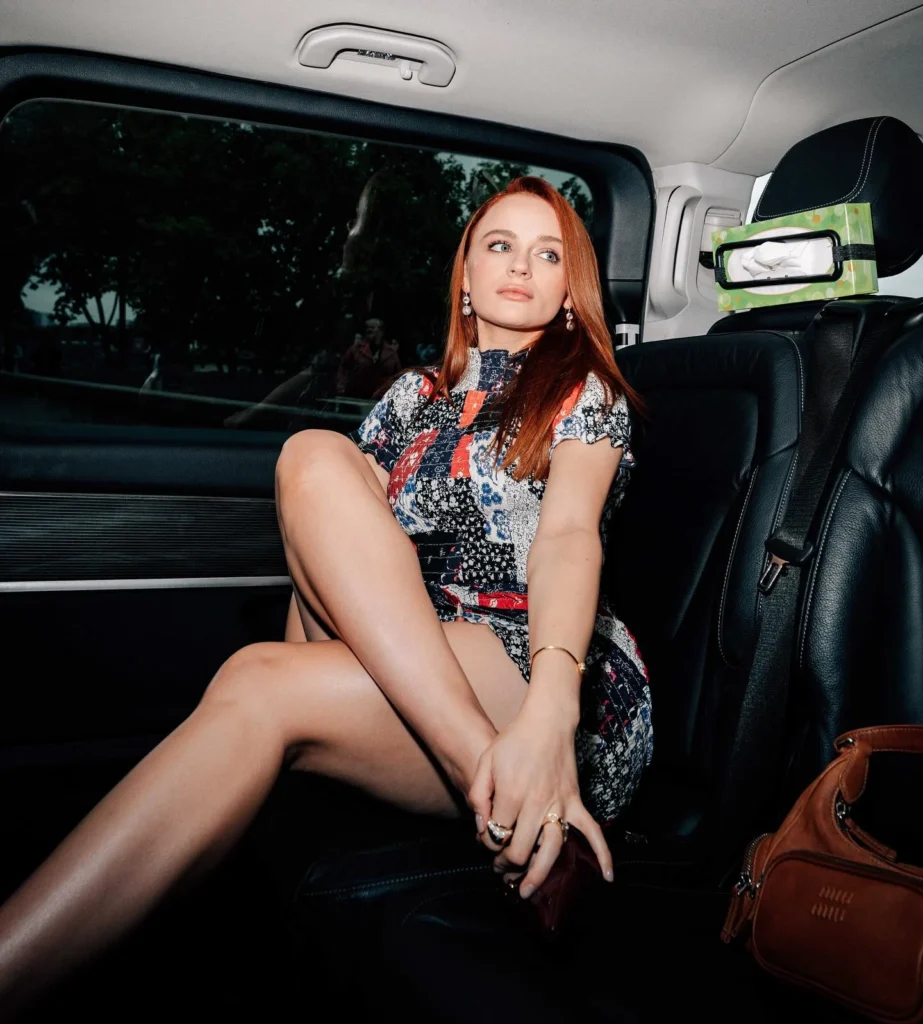
The ability to survive that tension requires mettle. Not the loud, theatrical sort of courage that announces itself, but the quieter variety: the courage to say yes to something unfamiliar, the courage to be seen differently and the courage to accept that not every audience member will understand the next choice. It is this quality that has increasingly become part of King’s appeal.
Her career is not founded upon a single persona. She can be romantic without being confined to romance, dramatic without abandoning humour, and involved in spectacle without surrendering character. She can embrace fashion and celebrity while retaining a sense of herself as a working actress. That versatility feels particularly relevant in an age when public figures are often reduced to a single recognisable identity. King resists that reduction. She is actress, producer, performer and increasingly an established cultural presence in her own right.
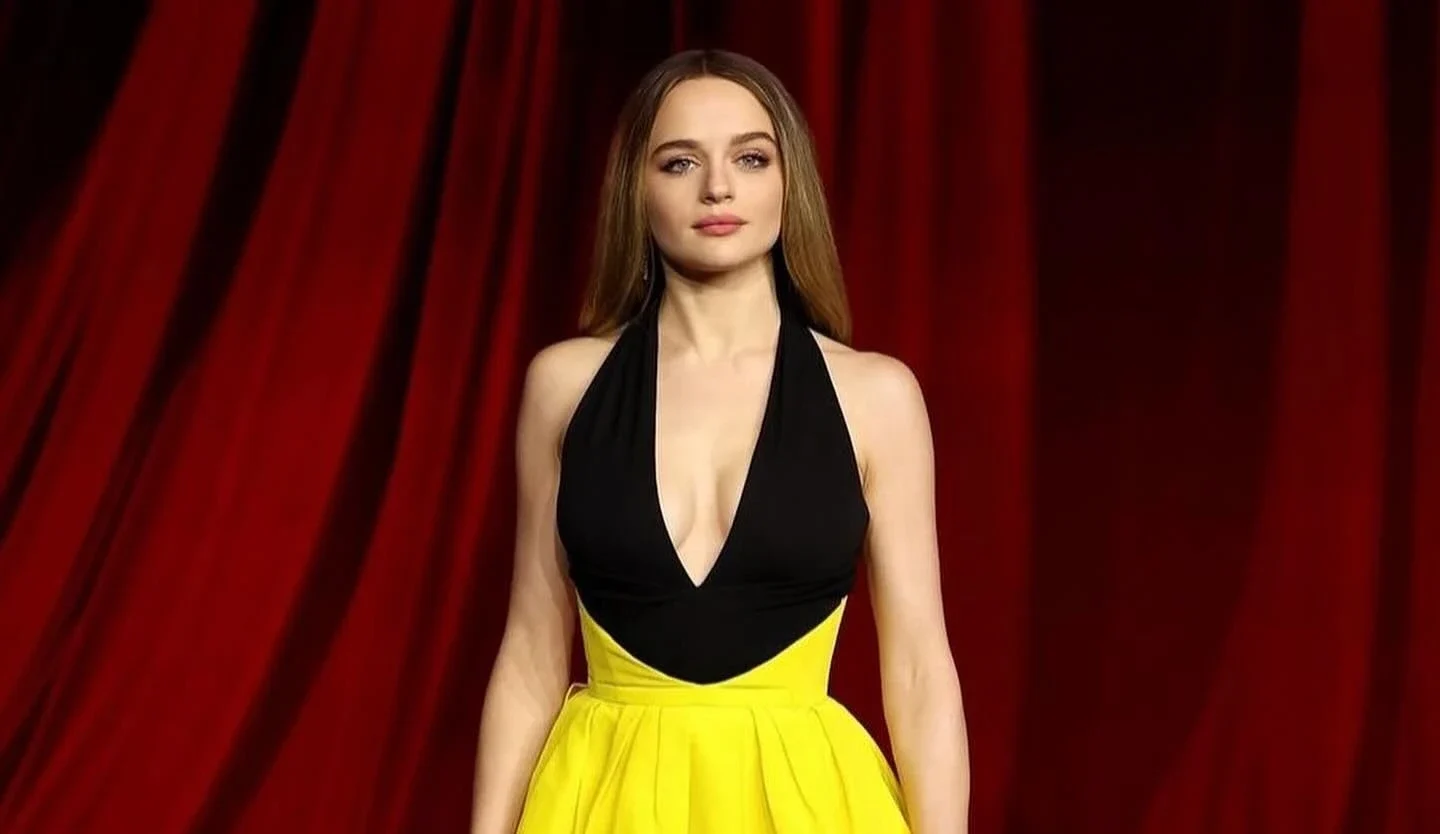
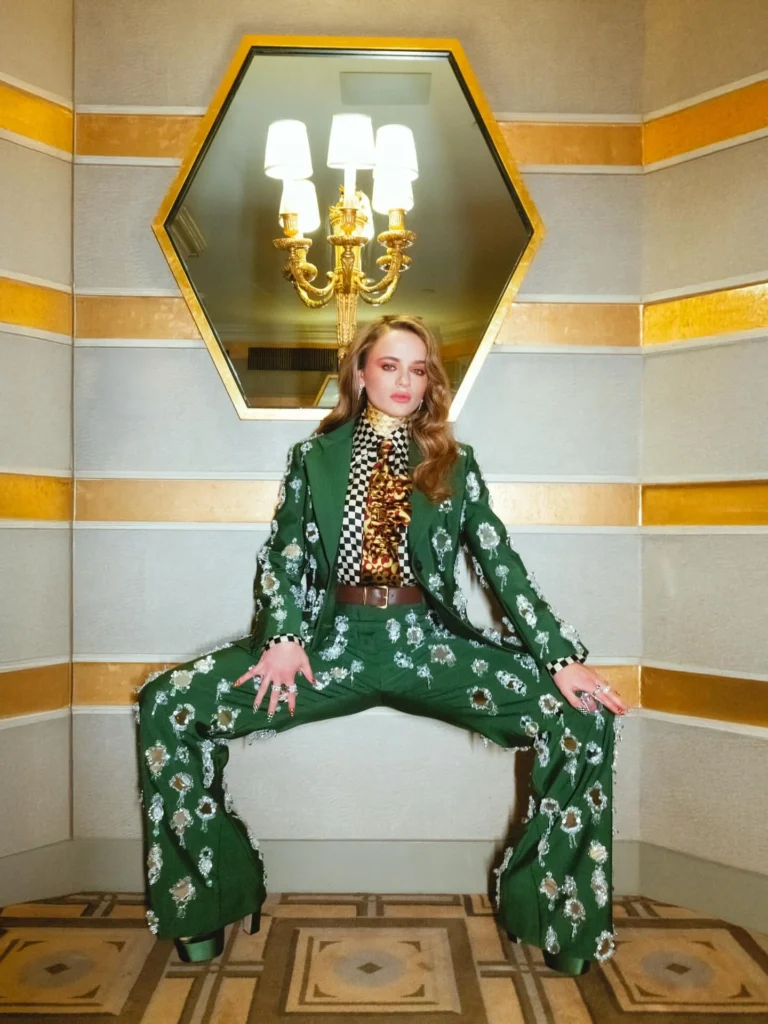
Her relationship with fashion has also become part of this evolution. The modern red carpet is no longer simply publicity. It is a visual language through which performers communicate mood, maturity and creative identity. King’s appearances have demonstrated a willingness to experiment with that language, allowing fashion to become another extension of the transformation taking place in her professional life. Her recent Practical Magic 2 promotional appearances, for example, have placed her within a distinctly nostalgic yet contemporary aesthetic, reflecting the broader visual conversation surrounding the film and its return to popular culture.
This relationship between cinema and fashion is culturally fascinating because both industries are concerned with transformation. Clothes allow us to imagine another version of ourselves, while acting allows us to inhabit one. The best performers understand both instincts, using appearance not as a substitute for substance but as another means of communicating identity.
Perhaps the most enduring quality in King’s career, however, is curiosity. Curiosity is an underrated virtue in celebrity culture. Fame can encourage certainty because audiences reward recognisability, yet artists require uncertainty. They need to wonder what else they can do, what other stories they can inhabit and what might happen if they move beyond what is expected. King appears to have retained that curiosity. More than two decades after entering the profession, she continues to explore, and that may ultimately be her greatest achievement.
It is not simply that she became famous young, nor that she successfully transitioned from child actor to adult performer, nor even that she earned critical recognition for a demanding dramatic performance. It is that she has refused to regard any of those achievements as a final destination. There is wisdom in that refusal. A career should not necessarily be measured by how quickly it reaches its summit. Sometimes its real value lies in how many landscapes it manages to cross.
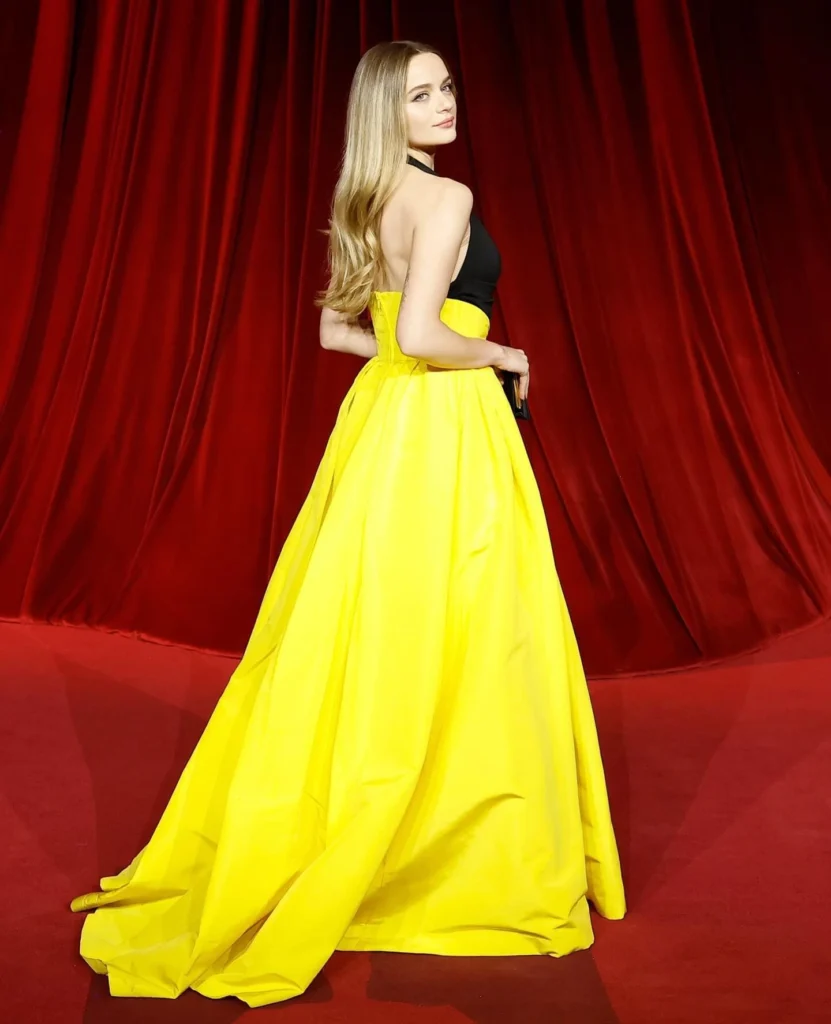
Joey King has crossed quite a few, from commercials to cinema, from childhood roles to complex drama, from teenage streaming phenomenon to producer, and from established franchises to new interpretations of familiar cultural worlds. Now, as she enters another chapter, she finds herself in an interesting position. She is young enough to represent Hollywood’s future, yet experienced enough to understand something about its past. That makes her a bridge between generations.
The old Hollywood understood the value of the star, while the new Hollywood increasingly values the creator. King sits somewhere between those worlds, carrying the visibility of the former and the creative ambition of the latter. Perhaps that is why her story feels timely. We live in a culture obsessed with becoming, with every season bringing another reinvention, another aesthetic and another supposedly definitive version of a person. Yet King’s career suggests that becoming is not about abandoning who you were. It is about adding to it.
The little girl who entered a studio years ago is still somewhere within the woman who now walks a premiere carpet. The teenager who became an international streaming sensation remains part of the actress who takes on darker material. The young performer who learned to work in front of a camera has become someone increasingly interested in what happens behind it. That is not reinvention for its own sake. It is maturation.
Perhaps this is where Joey King’s cultural significance truly lies. She embodies a generation of women who are increasingly unwilling to accept that their identity must remain fixed simply because the public has become familiar with it. They can be actresses and producers, glamorous and serious, commercially successful and creatively ambitious. They can inherit cultural traditions without being imprisoned by them.
In that sense, her journey is larger than Hollywood. It is about the freedom to become, the freedom to change one’s mind, the freedom to surprise an audience and the freedom to step beyond the role that made you recognisable and ask what might exist beyond it. There is an old English word for this kind of character: mettle. It describes courage, spirit and strength of character, qualities that have increasingly defined King’s professional journey.
Joey King has built her career with precisely that quality, not by loudly announcing reinvention, but by quietly pursuing it. Perhaps that is the finest measure of an enduring artist. It is not how loudly they announce their arrival, but how often they give us reason to look again.
Joey King has been growing up in public for most of her life. Now, she is doing something more interesting: defining what comes next. Her story is no longer simply about a child performer who became a Hollywood star. It is about an artist learning to determine the terms of her own evolution, carrying memory into the future without allowing memory to define her. In an industry perpetually searching for its next sensation, there is something rather compelling about an actress who understands that longevity is not achieved by remaining the same, but by continuing to discover what else one might become.
“The child actress has not vanished. She has evolved. Nothing has been discarded; everything has been accumulated.”
“A career should not necessarily be measured by how quickly it reaches its summit. Sometimes its real value lies in how many landscapes it manages to cross.”