What if an elevated life is defined not by our possessions, but by what we observe?
We are immersed in so many things that no longer capture our attention. Books stacked unevenly. A cup left on a bedside table. A half-open drawer. The morning light falling across a familiar room. Familiarity has a way of making beautiful things invisible. The mundane in our lives does not necessarily lack beauty; perhaps it is simply beauty we have stopped appreciating.
Art is abundant around us. It is not meant to exist only in galleries and museums, or as carefully selected pieces displayed on otherwise empty walls. We often associate art with something to acquire, frame and preserve well-crafted objects chosen for their aesthetic or value. Yet art can be much more than something we own. It can influence the way we see, experience and interact with the world around us.
There are some people who find meaning in the ordinary. They feel intrigued by the spaces, shapes and movement around them. For them the place in which they live is more than a functional room. It becomes the source of their inspiration.
And Zaha Hadid was one of them. She was interested in the potential of space long before her architecture gained worldwide recognition. She developed a strong interest in art, design and geometry from an early age. Drawings, paintings and models became an important part of her visual language. She saw architecture as something more than just shelter. It was something that could be experienced almost like art.
However, she wasn’t always given the appreciation she deserved. Hadid faced years of rejection, but it didn’t stop her from seeing architecture differently. She didn’t let people’s judgment hinder her vision. She continued developing it until the world caught up with it. In one of her reflections on architecture, she said that it should be able to “excite you, to calm you, to make you think.” Which reminds us that space itself is curated to evoke curiosity. The places we inhabit influence how we move, feel and perceive the world around us.
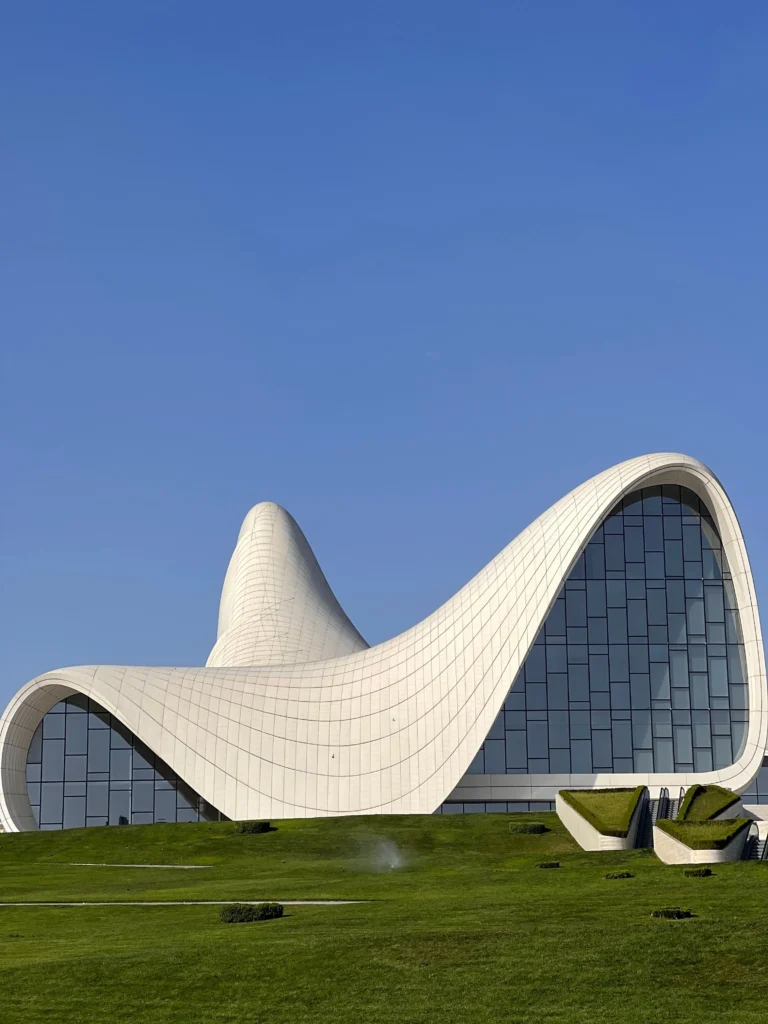
Architecture is often seen as something rigid, made up of walls, floors and concrete. But for her, it resembled sweeping forms, fluid lines and futuristic structures that created an illusion of motion. She was fascinated by the relationship between different spaces, movement and geography, which stimulated her interest and eagerness to be bold with her own designs.
Zaha Hadid’s visual language was formed through drawings, paintings and models, which played a significant role in her innovation. Her drawings weren’t simply plans for buildings. They gave her the freedom to experiment with shapes, perspectives and movement, allowing her ideas to take form before they could exist physically. Her ability to picture architecture in her mind before its creation made the process almost artistic.
Zaha’s ultimate ambition was to “create fluid space, in every sense, between inside and out.” This idea became one of the defining characteristics of her work. Rather than viewing a building as a fixed structure, she sought to understand how spaces could interact and affect the experience of those who moved through them.
One of her best projects, the Heydar Aliyev Centre, helped establish her as a global architectural force. At first glance, it looks strangely odd, but with careful observation, the structure seems to rise from the ground and fold over itself, creating sweeping curves that give it a sense of movement. It shows how Zaha transformed a functional building into something that demands your attention.
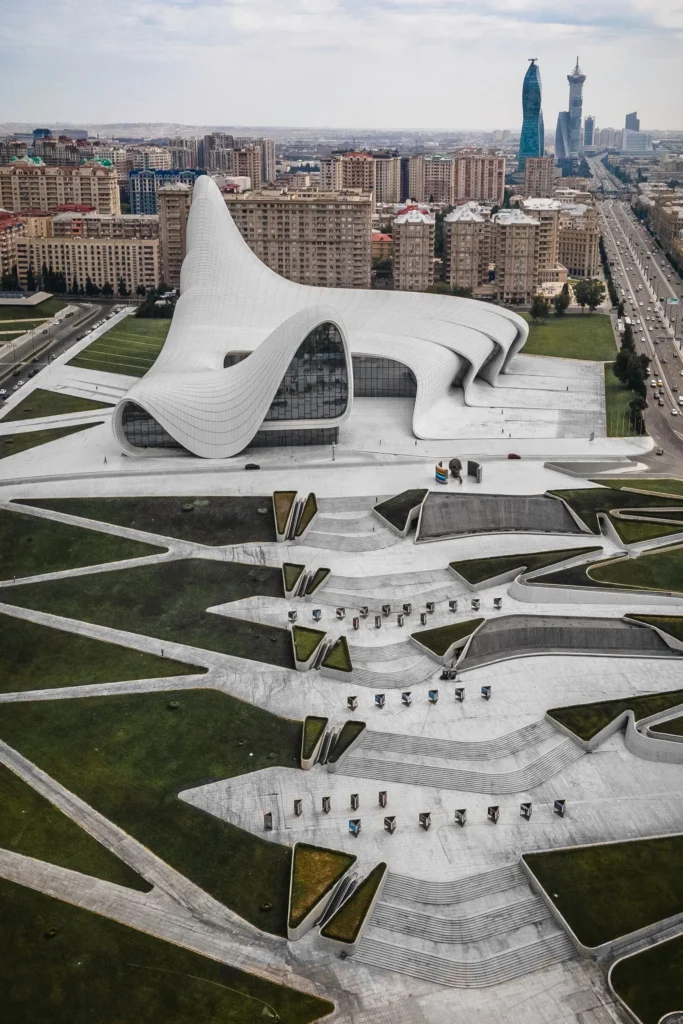
The Centre makes one realize that in designing the structure, Hadid did not create a mere building, but transformed the perception of space itself. What could have been just another functional building became almost sculptural in its approach, transforming the functional into the aesthetic through a different way of seeing.
Perhaps this way of seeing is not limited to architects. An ordinary person can live an ordinary life and still find beauty in it. To curate our lives is not to make every moment perfect. It is to become more conscious of the moments that already exist. We may not realize it, but the things we choose to keep, arrange and notice can become sources of inspiration. In the end, maybe all it takes to curate beauty is to learn to see the extraordinary in the ordinary.