After years dominated by artfully distressed finishes, faded washes and deliberately undone silhouettes, February 2026 marks a decisive pivot in fashion’s mood. The pendulum has swung away from nostalgia tinged softness and towards something far more rigorous. Enter the Brut Denim suit, a head to toe expression of raw, unwashed cotton in its purest state. Stiff, structured and unapologetically authentic, this is denim before it has been softened by time or technique. It is fabric at its most honest, cut into sharp jackets and wide leg trousers that command presence without embellishment.
Brut, borrowed from the French word for raw, feels apt. This denim has not been pre distressed, sandblasted or chemically faded. It arrives deep indigo, almost inky, with a crisp handle that holds its shape. When tailored into a suit, it creates an architectural silhouette that stands in stark contrast to the slouchy streetwear of recent seasons. The jacket sits firmly on the shoulders, often slightly boxy, while the trousers fall in a clean uninterrupted line to the floor. There is weight to the fabric, a tactile reminder that this is cotton woven densely and left untouched.

The appeal of the Brut Denim suit lies partly in its restraint. At a time when fashion has flirted with hyper decoration and algorithm driven micro trends, raw denim feels grounded. It signals deliberation rather than impulse. The absence of artificial wear marks invites the wearer to create their own narrative through movement and time. Creases form naturally at the elbows and behind the knees. Fades develop according to posture and habit. The garment evolves with the body, becoming uniquely personal rather than mass produced in appearance.
This return to untreated fabric aligns closely with the growing emphasis on craftsmanship and slow fashion. Consumers are increasingly sceptical of processes that artificially age garments in factories, recognising the environmental toll of excessive washing and chemical treatments. Raw denim requires fewer interventions during production, reducing water usage and energy consumption. In its rigidity and depth of colour, it communicates integrity. It suggests that what you see is what you get, without theatrical distressing to simulate history.

Designers have embraced this philosophy by elevating denim to suiting status. Once confined to workwear and casual attire, it is now cut with the precision typically reserved for wool or tailoring cloth. Seams are reinforced, lapels are sharply defined and waistbands are structured to sit cleanly against the body. The wide leg trouser, a recurring silhouette this season, balances the stiffness of the fabric with fluid proportion. When worn together, jacket and trousers create a uniform that feels both utilitarian and refined.
There is an intriguing tension in this look. Denim has long been associated with rebellion, labour and informality. By transforming it into a disciplined suit, fashion recontextualises its heritage. The Brut Denim suit is not about rugged individualism in the traditional sense. Instead, it conveys a modern austerity, a quiet confidence that does not rely on obvious luxury markers. There are no loud logos or ornamental flourishes. The impact comes from cut, proportion and the rich saturation of untreated indigo.
Styling reinforces this polished utility. Crisp white shirts, minimal leather belts and sturdy boots often accompany the ensemble, maintaining a streamlined palette. Some opt for tonal layering, pairing the suit with a slightly lighter chambray or a fine knit in navy. The key is coherence. Because the fabric is visually dense, accessories are chosen with restraint. Jewellery tends towards brushed metals, echoing the industrial roots of denim hardware.
The cultural resonance of Brut Denim also reflects a broader fatigue with disposability. Fast fashion cycles have accelerated to the point of exhaustion, with trends appearing and disappearing in weeks. In contrast, raw denim demands patience. It softens gradually, rewarding consistent wear. Enthusiasts speak of break in periods and the satisfaction of watching the fabric mould to their form.

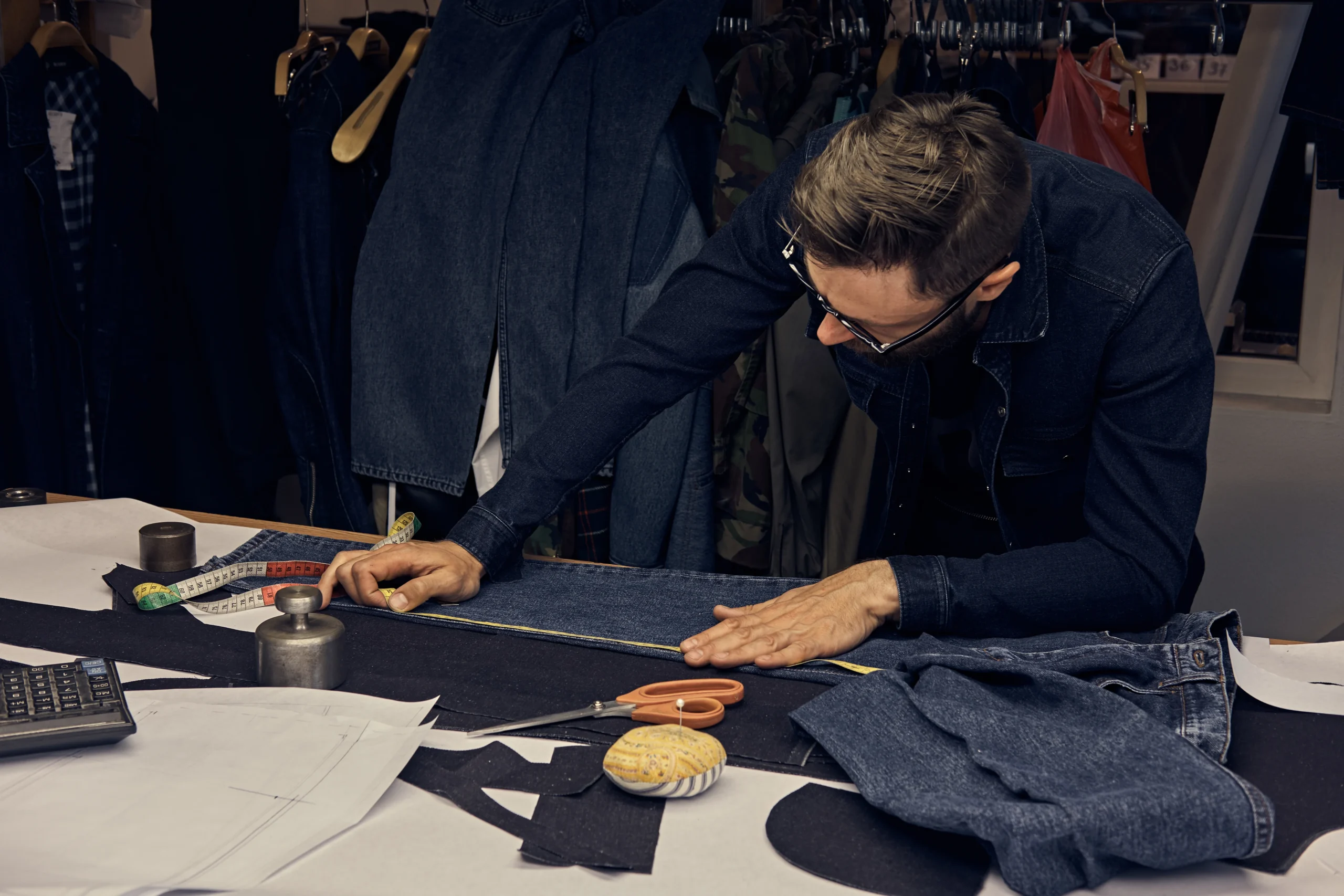
This slower relationship with clothing feels radical in its simplicity. It asks the wearer to commit rather than constantly replace. From a technical perspective, the quality of the cotton and the tightness of the weave are paramount. High grade selvedge denim, woven on traditional shuttle looms, is particularly prized. The finished edge prevents fraying and signals attention to detail. These elements may seem subtle, yet they underscore the garment’s craftsmanship. In a Brut Denim suit, construction is not hidden. Stitching is visible, rivets are purposeful and seams are integral to the aesthetic.
There is also a psychological dimension to wearing raw denim in suiting form. The initial stiffness encourages upright posture. The structured jacket frames the torso, while the weight of the trousers anchors the stance. Unlike softer fabrics that drape and conceal, Brut Denim holds its line. It invites presence. In professional settings, it reads as confident yet unconventional. In creative circles, it signals discernment and an appreciation for material authenticity.

Critics may argue that such rigidity risks discomfort or inflexibility. Yet part of the appeal lies precisely in that firmness. In an era defined by fluid identities and digital flux, there is comfort in something tangible and substantial. The fabric creases, resists and ultimately yields, mirroring the process of breaking in a pair of well made shoes. Over time, the suit becomes more supple without losing its structure, achieving a balance between discipline and ease.
As February unfolds, the Brut Denim suit stands out not as a fleeting novelty but as a considered recalibration. It does not shout for attention through novelty cuts or flamboyant colour. Instead, it relies on purity of material and clarity of form. It gestures towards workwear heritage while embracing contemporary tailoring. Most importantly, it embodies a commitment to longevity.
Fashion often thrives on reinvention, yet occasionally it returns to fundamentals. Raw cotton, woven tightly and left unwashed, is as fundamental as it gets. In elevating this material into a structured suit, designers are making a statement about value and time. They are suggesting that authenticity, once stripped of artifice, can feel surprisingly modern.
The Brut Denim suit ultimately represents more than a shift in fabric choice. It is a symbol of intention. In its deep indigo surface and uncompromising structure, it declares that style need not be distressed to be interesting. Sometimes the boldest move is to present a material exactly as it is, and allow life to leave its mark slowly and honestly.