Jodie Comer possesses the rare ability to disappear completely while somehow becoming unforgettable at the very same time. In an era where celebrity is increasingly driven by visibility, overexposure, and carefully manufactured personas, she has built one of the most respected careers of her generation through restraint, emotional precision, and extraordinary transformation. There is nothing performative about her fame. It feels earned through craft rather than spectacle.
What makes Jodie Comer so compelling is not simply her talent, although her talent is undeniable. It is the emotional intelligence behind every performance, the way she moves between vulnerability and danger, softness and brutality, glamour and ordinariness with astonishing fluidity. She does not merely play characters. She dissolves into them so completely that audiences often forget where the actress ends and the performance begins.
Born and raised in Liverpool, Jodie grew up far from the polished machinery of elite acting culture. There was no calculated roadmap towards international fame. Instead, her early years were shaped by instinct, curiosity, and an unusual emotional sensitivity that would later define her performances. Teachers recognised her natural ability early on, particularly her gift for emotional realism and mimicry. Yet even then, there was nothing theatrical about her ambition. She approached acting not with vanity, but with fascination.

Long before Hollywood arrived, British television became the training ground that quietly sharpened her craft. Series such as My Mad Fat Diary, Doctor Foster, and Thirteen revealed a young actress capable of carrying enormous emotional weight with remarkable subtlety. Even in supporting roles, there was something impossible to ignore about her screen presence. She understood silence instinctively. She understood tension. Most importantly, she understood people.
Then came Killing Eve.
It is impossible to discuss Jodie Comer’s cultural impact without acknowledging the seismic effect of her portrayal of Villanelle. What could have easily become a one dimensional assassin evolved into one of the most mesmerising characters modern television has produced. Villanelle was terrifying, childish, seductive, lonely, glamorous, violent, emotionally wounded, and darkly funny all at once. In lesser hands, the contradictions would have collapsed. In Jodie’s hands, they became hypnotic.
The performance transformed her career overnight, but more importantly, it transformed public understanding of what female characters could be allowed to embody onscreen. Villanelle was not written to be morally digestible or emotionally convenient. She existed outside traditional expectations of femininity entirely, and Jodie embraced that chaos fearlessly.
What stunned audiences most was her ability to shift identities almost scene by scene. One moment she carried the elegance of a couture model drifting through Parisian luxury. The next she projected the emotional volatility of a wounded child. Her command over accents, physicality, humour, and emotional rhythm felt almost unnerving in its precision. It was not acting that called attention to itself. It was transformation so complete it appeared instinctive.
Yet despite becoming globally recognised, Jodie Comer never fully surrendered herself to celebrity culture. While many stars cultivate constant visibility, she remained remarkably private and emotionally grounded. There is still something refreshingly untouched about the way she navigates fame. She does not appear addicted to performance outside the screen. Interviews reveal someone thoughtful, self aware, slightly shy, and deeply connected to ordinary life beyond Hollywood mythology.
Perhaps this groundedness explains why audiences trust her emotionally. Even at the height of global fame, she continued speaking openly about vulnerability, anxiety, self doubt, and the surreal nature of sudden visibility. She never attempted to position herself as untouchable perfection. Instead, she allowed herself to remain human in public, which only deepened audience admiration.
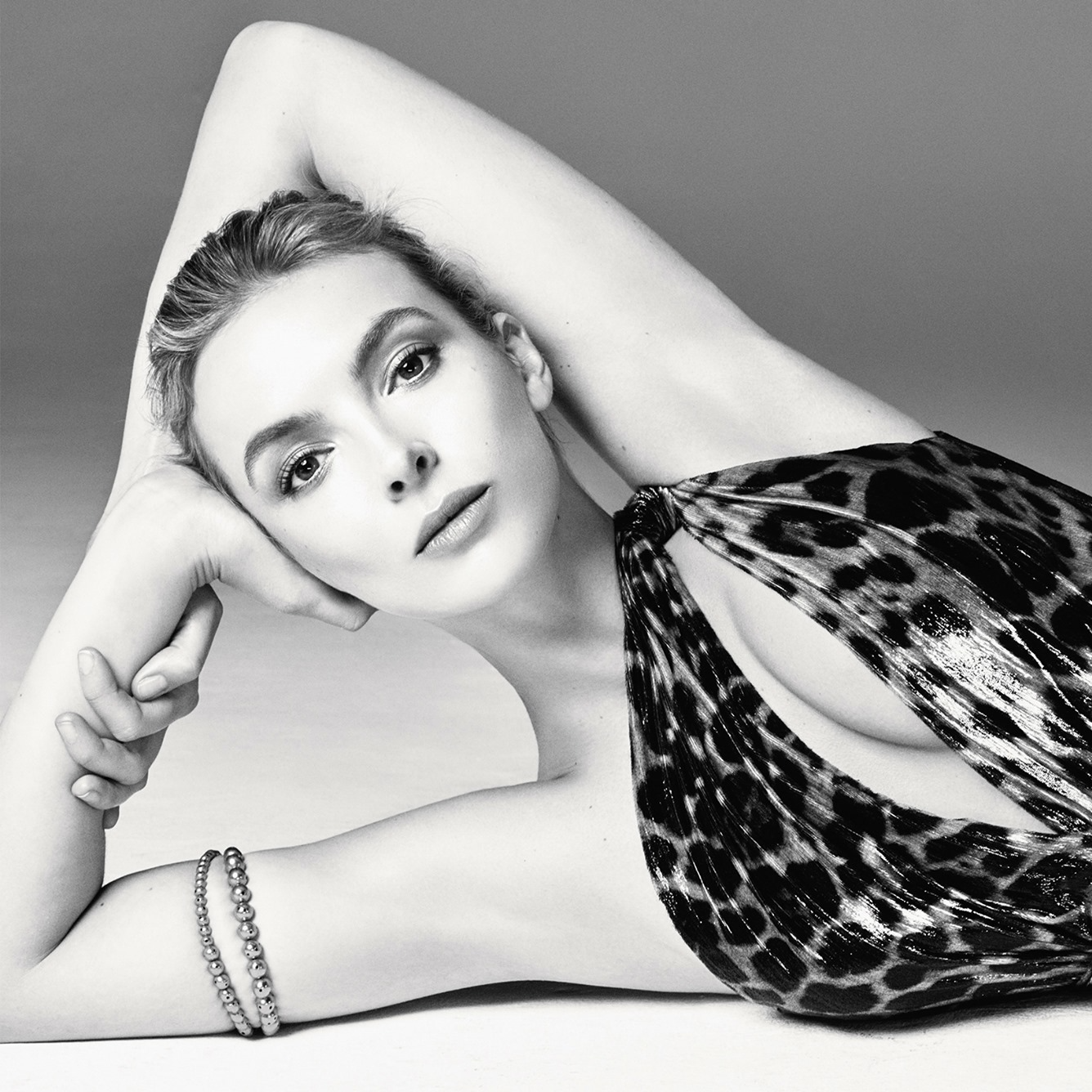
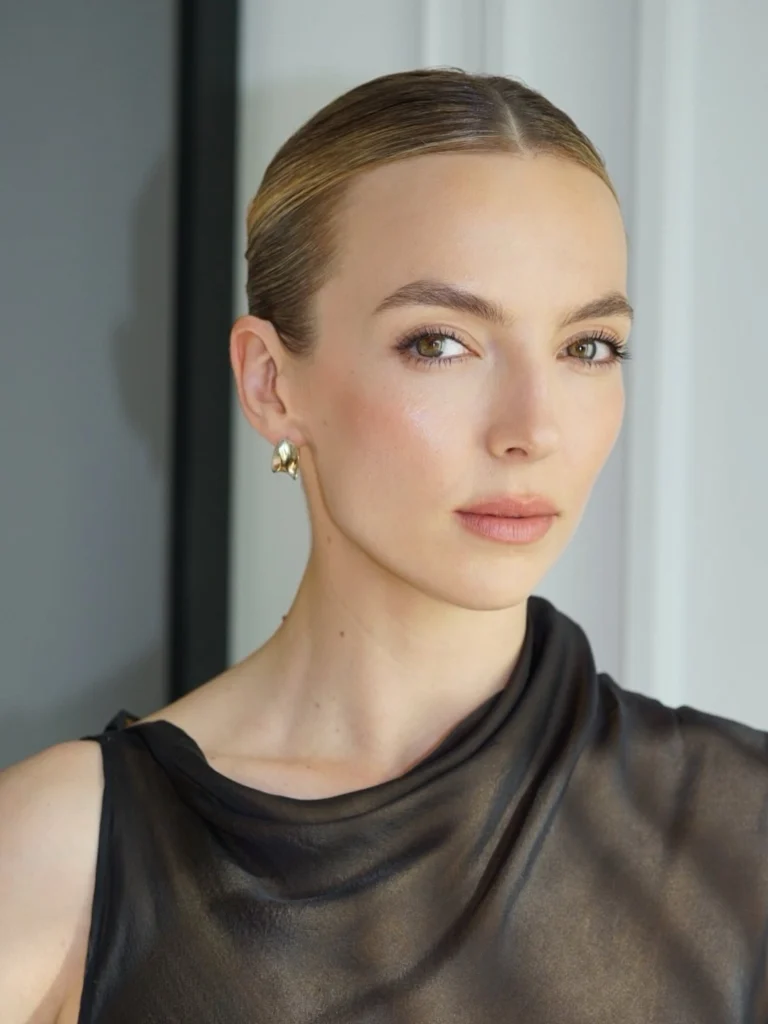
Beauty also occupies an unusual place within Jodie Comer’s public identity. She is undeniably striking, yet her appeal has never relied upon conventional glamour alone. Her face carries emotional elasticity rather than static perfection. She can appear aristocratically elegant in high fashion editorials before transforming entirely into an exhausted nurse, grieving daughter, or psychologically fractured woman onscreen without losing credibility in either world.

Fashion houses quickly recognised this versatility. Unlike celebrities who simply wear luxury, Jodie inhabits fashion emotionally. Whether appearing in minimalist tailoring or dramatic couture, she carries clothing with the same psychological instinct she brings to acting. Nothing about her glamour feels empty. There is always emotional atmosphere beneath it.
This emotional depth became even more visible through projects beyond Killing Eve. In Help, her devastating portrayal of a care worker during the Covid pandemic stripped away every layer of glamour and performance. The role demanded raw emotional realism rather than charisma, and Jodie delivered one of the most emotionally painful performances of her career. There was no vanity in it whatsoever. Only truth.
Similarly, her work in theatre further proved the depth of her abilities. Performing a one woman play such as Prima Facie required not only technical brilliance, but extraordinary emotional endurance. Carrying an entire production alone night after night demands a level of discipline and vulnerability few actors can sustain. Critics and audiences alike recognised the performance as career defining. It was not merely impressive. It felt culturally important.
What makes Jodie Comer especially fascinating within modern celebrity culture is her resistance to becoming emotionally flattened by fame. Many public figures eventually become trapped inside recognisable versions of themselves. Jodie continuously escapes categorisation. She can embody danger, tenderness, awkwardness, seduction, devastation, humour, and brutality without any of it feeling calculated.
This unpredictability preserves mystery around her, something increasingly rare today. Audiences cannot entirely anticipate what she will become next, and that uncertainty keeps her magnetic.
At the same time, there remains profound emotional accessibility beneath her artistry. Despite critical acclaim, awards, and international recognition, Jodie still feels emotionally connected to ordinary women watching her work. Perhaps because she never performs superiority. There is humility in the way she speaks about acting itself, as though she still views the craft with curiosity rather than entitlement.
Social media only reinforces this contrast. In a digital era dominated by relentless self branding, Jodie’s online presence remains understated and selective. She shares glimpses rather than constant access. This restraint allows her work to remain central rather than dissolving beneath endless visibility. Audiences encounter her primarily through performance, not algorithmic overexposure.
As British cinema and television continue evolving globally, Jodie Comer increasingly represents a new kind of screen icon. One not built solely through glamour, publicity, or celebrity mythology, but through artistic fearlessness and emotional truth. She belongs to a generation of performers redefining what audiences expect from actresses entirely. Beauty alone is insufficient. Perfection is forgettable. What people crave now is emotional authenticity, complexity, and transformation.
Jodie embodies all three effortlessly.
There is also something deeply British about her appeal in the most elegant sense. She carries emotional restraint without coldness, confidence without arrogance, glamour without artificiality. Even at her most cinematic, she never feels emotionally unreachable. Beneath the awards, couture gowns, and extraordinary performances remains the unmistakable sense of a woman still connected to where she came from.
Ultimately, Jodie Comer’s greatest strength may be her refusal to simplify herself for public consumption. She allows contradiction to exist naturally within her identity. She can be vulnerable and powerful, soft and dangerous, ordinary and extraordinary simultaneously.
In a culture increasingly obsessed with instant visibility and disposable fame, Jodie Comer has achieved something far rarer: permanence through transformation.
And perhaps that is why she continues to feel less like a celebrity and more like a phenomenon quietly unfolding in real time.